
Turn any goal you wanted to achieve into an RPG quest.
Imagine you post a note about your real work to legendary characters from another world. What would they say back? Would you hold to your goal as the plot unfolds?
Free — no paywall.
Tharion reads your note over your shoulder and taps the line about the ticket.

The candles gutter. A voice speaks from inside your own head.

A trinket-seller squeezes past the tables, a little brass box held tight in both hands.

Since the shadow came, nobody stops at my stall. You said onboarding is almost done — finish it, and give them a reason to come back.
Looking for a productivity boost?
So was I.
I read the self-help books. Built habits, broke them, built them again. Meditation. Bullet journals. Focus blocks. Productivity gurus. To-do apps.
None of it was wrong and none of it stuck. I always wondered what would happen if you mixed game mechanics with the science of progress reporting and goal attainment*, and built a proper productivity tool out of it. One that’s actually fun to use.
So I tried, and built GoalWatch. Honestly, I only understood why it works after I’d built it.
— Bartosz, a programmer from Poland who built this
* Harkin et al. (2016), “Does monitoring goal progress promote goal attainment? A meta-analysis of the experimental evidence,” Psychological Bulletin.
What you actually get
Every day gets an answer.
Writing your progress down and reporting it to others helps you reach your goals.* GoalWatch makes sure the report never goes into the void: characters read every note, quote it back, push you forward and build the plot from your steps.
Points of view you don’t have.
A Paladin and a Rogue won’t read your plan the same way. You get advice from both, and from your enemies, about where you’re about to slip.
The story holds you to your word.
Write that you’ll finish the onboarding, and it becomes a quest. Forget it, and the story asks.
How it works
Four steps. No magic.
-
1
You write one note a day.
What you did, what’s stuck. Three lines is enough. We call it a brick.
-
2
The system casts it into an RPG campaign.
It writes a response from another world, weaving your note into the story as narration. It generates sub-quests, advice and points of view from unique characters.
-
3
You step into the plot.
Defeat enemies, meet new characters, collect XP and artefacts. The story remembers what you promised, and asks about it.
-
4
You build your hero profile.
Your Council of Watchers grades every day on five attributes: Perseverance, Insight, Effectiveness, Integrity and Belief. Over weeks, you see how your work looks to someone other than you.
Why it doesn’t read like AI slop.
A fully generated story would fall apart in two days. So GoalWatch doesn’t generate one. The world, the 11 chapters, the 50+ characters and their histories are written by hand and reviewed line by line. The AI gets one narrow job: answer your note in a character’s voice, inside a frame it isn’t allowed to leave.
Think of a D&D module. The dungeon is written before you arrive. The game master only improvises what’s said to you.
Your brick, narrated
One note.
Here’s what came back.
Cut the signup form from 7 fields to 3. Conversion test runs tonight.
The Council
On your side. Not always polite about it.
Elara plants her shield beside the brick.

Seven fields down to three. I'll keep the lantern lit until tonight's numbers land.
You start with 4 Watchers, and can have up to 9 active.
The Commoners
Folk who need something you’re building.
Lia pushes through the crowd, a cold cloth still in her hand.

My brother hasn't woken since the shadow passed over him. Run that test tonight — the elder says a finished thing breaks the sleep.
Ship it in your next brick — she gets her brother back, you get the loot.
The Enemy
Wants you to quit. Has opinions on how.
Something vast uncoils above the village.

Nyx drops from the rafters, knife already out.

Before You Enter
Questions the Gatekeeper Gets Asked.
Do I have to care about the dragons and paladins?
Not as a fan, no. But they aren’t decoration. RPGs are the genre built around quests — goals, progress, enemies, rewards — so that’s where I borrowed the mechanics. I didn’t want to build another cold, robotic tracker. The fantasy also gives you distance: when a Berserker tells you your week was soft, it’s a character in a game saying it, not your boss, so you can hear it without taking it personally. And the characters remember you, unlike a chat thread; the villains give your impostor voice and your quitting voice a name you can fight.
How much time does this take per day?
Three to five minutes to write your note. That’s the whole daily commitment. Reading other people’s notes in your village is optional.
Are the AI Watchers any good — or just decoration?
They’re the whole point. 50+ hand-written characters, up to nine active at once, each with its own backstory, class and temperament — a Paladin sounds nothing like a Berserker. They quote what you actually wrote, argue with each other, hand out quests and grade your day. They don’t coddle you. @mention one and it answers.
What if I miss a day?
Your battery drains about 7% a day without a note. Miss a day or two and you recover easily. Go silent for two weeks and it hits zero; after a 7-day grace period, the Shadows take your Citadel. Strict, not cruel: you can always start a new goal or spend a life point.
What are gems, and what do I do with them?
The in-game currency, separate from the AI fuel. Earn them by showing up and finishing side quests, or buy them. Spend them in the bazaar on artefacts and new Watchers.
What if the AI fuel runs out?
AI replies run on Oil from a pool shared by the whole community. If it runs dry, the game keeps working, but the Watchers go half-blind: short hand-written lines instead of full reactions, until a free Gold Oil drop arrives or someone buys a vial that refills the pool for everyone.
Is this only for coders and indie hackers?
No. Any goal that takes weeks or months and that you struggle to finish alone: a novel, a thesis, a side business, a career change, an instrument.
Who sees my bricks?
By default, only you and your Watchers. You start in a private village, nobody gets in unless you invite them, and nothing is shown to search engines. Prefer company? Join a public village where up to 11 other people read your bricks too. Even then, the open web sees only your level and brick count, never what you wrote.
What if my village is inactive?
Move to an active one. You keep your Citadel’s level. Early villages are matched by hand.
Write your first note today.
Your first four Watchers are already waiting in “Tidebreak”.
Write my first noteFree to play — no card needed.
Join now — your founder bundle

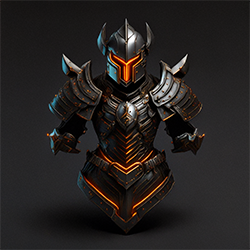


The Oathwarden Armour is founder-only — never sold, never found. Your gems are yours to spend in the bazaar.